
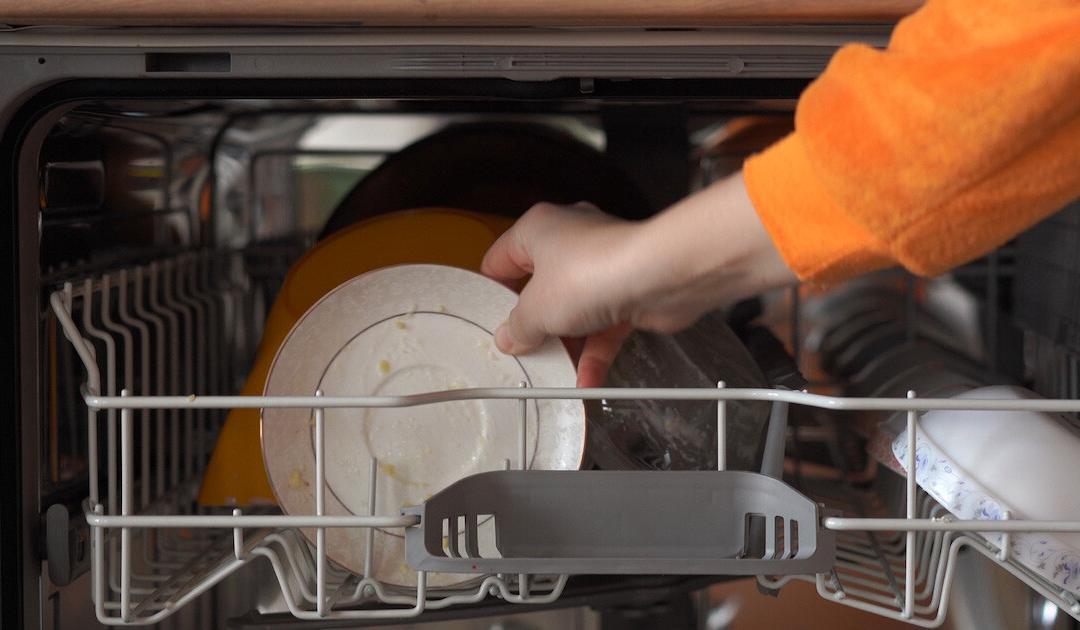
An unpleasant smell — sometimes even a fishy odor — coming from the dishwasher is a common problem. Contrary to what you might think, the smell doesn’t come from one or two poorly rinsed plates: it often permeates the entire appliance, which can make it harder to eliminate.
Why Does a Dishwasher Develop Odors?
Heat is the main culprit. During summer, higher indoor temperatures speed up bacterial growth, especially in enclosed spaces like the inside of a dishwasher. Food residue left in the filter or stuck in the appliance’s crevices then becomes a breeding ground for bacteria, causing the odor.
Households that use their dishwasher infrequently (a couple, a single person) are especially at risk: if it takes 4 to 5 days to fill the appliance before running it, dirty dishes have that much more time to develop odors inside the machine.
Clean the Filter Regularly
This is where the most food residue accumulates, making it the first thing to check. Remove the filter and clean it with warm, soapy water. This should be part of your regular maintenance routine, not just a one-time fix once the odor has already appeared.
Vinegar to Dissolve Hidden Grime
Vinegar is effective at loosening grime lodged in hard-to-reach parts of the appliance. Pour about two cups of vinegar into the bottom of the empty dishwasher and run a full cycle with no dishes inside.
Baking Soda
After a vinegar wash, sprinkle baking soda in the bottom of the appliance and run a short cycle with very hot water — the heat helps dissolve the baking soda thoroughly. Baking soda can also be used to clean the interior walls: dissolve a tablespoon in a bowl of water and gently scrub with a cloth or sponge.
Lemon for a Finishing Touch
Once the appliance is thoroughly cleaned, skewer half a lemon (pitted) onto the top rack during a normal wash cycle. The result: a fresh scent and shinier dishes.
Good Habits for Everyday Use
- Never fully close the door between washes. A gap of about one centimeter is enough to create slight air circulation, letting moisture escape and slowing bacterial growth.
- If you use your dishwasher infrequently, take advantage of the rinse mode offered on many models to remove food residue while waiting for the dishwasher to fill up, rather than letting dirty dishes sit for several days.
- Avoid hand-rinsing dishes before loading the dishwasher — it’s unnecessary, and the appliance’s rinse mode does the job more effectively. See why here.
In Summary
The combination of a clean filter, a regular vinegar/baking soda cycle, and leaving the door ajar between washes solves the vast majority of persistent odor cases. If the smell persists despite these steps, it may be a mechanical issue (blocked drain, faulty seal, etc.) rather than simply a maintenance matter.
Is your appliance not working properly? Contact us here.