
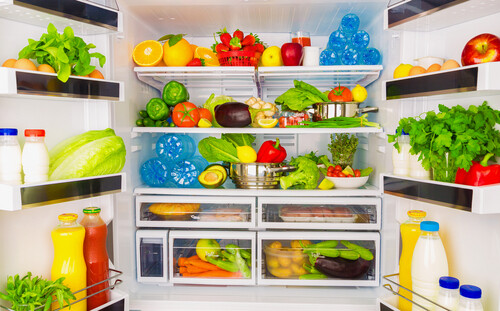
Do you put groceries away “wherever there’s room” in the fridge? That’s probably not ideal. Here are a few tips to help your food last longer… or at least help you find it faster!
Find the coldest spot
The temperature inside your fridge varies a bit from spot to spot. A thermometer left in a glass of water for a few hours in different spots can help you find the best place to store food. You might also discover your fridge is running too warm or too cold (it should sit at 4°C). As a general rule, fridges with the freezer on top have a colder zone at the bottom.
Store fish and raw meat in the coldest section. If that’s the bottom shelf, even better: if liquid leaks from the packaging, it won’t drip onto other food and cause contamination.
Temperature is usually more stable at the back of the fridge, in the cool airflow from the compressor. The door is the warmest spot and sees the biggest temperature swings. Store condiments, mayonnaise, and unopened juice there.
Adjust your shelf height
Shelf height is easy to adjust, especially on higher-end fridges. If your favourite products don’t fit where you want them, change the shelf height!
Use your drawers correctly
Use one drawer for salad greens and vegetables that like humidity, and put fruit in another drawer that stays drier. If your drawers have a humidity slider, check now and then that it hasn’t been bumped out of place.
If the egg and butter compartments are enclosed, that’s to keep them away from cold air circulation (so the butter stays softer). Short on space? You can also keep eggs in their carton on the middle shelf.
Keep your beer nice and cold
If you like your beer really cold, feel free to store it in the coldest spot in your fridge. Beer specialists suggest storing bottles upright, especially craft beers. And keep in mind that a fridge is considered too cold to properly serve dark beers. Consider a wine/beer cellar set to the ideal beer temperature instead.
Don’t leave your fridge empty
An overstuffed fridge with food crammed in won’t run well, as you’d expect. But a fridge that’s too empty isn’t ideal either: cold escapes more easily. Keep a few bottles of water or soft drinks in there: it’ll help keep the temperature more stable.
A fridge isn’t a bread box
Bread goes stale faster in the fridge. And don’t store it on top of the fridge either; the heat will dry it out. The best way to make bread last longer than on the counter: slice it if needed, then freeze it!
A fridge isn’t a compost bin
While reorganizing your fridge, take the opportunity to toss out expired food; it’s also a good time to wipe down the shelves with a damp cloth. Keep in mind that higher-end fridges offer better temperature and humidity control, and some even have zones with adjustable temperature. Understanding how your fridge works really does help keep your food fresher for longer! If your fridge struggles to keep food cold despite being well organized, that might not just be a storage issue: check out our article Fridge Stopped Cooling to pinpoint the exact cause.
Call 514 800-4064
FAQ
Why shouldn’t some fruits and vegetables be stored in the fridge?
Tomatoes, bananas, potatoes, onions, and garlic lose flavour or texture in the cold, and some even spoil faster. Several of these also release ethylene, a gas that speeds up ripening in nearby produce. They’re better kept on the counter, in a dry spot.
Can organizing your fridge too tightly restrict airflow?
Yes. Pressing containers against the back wall or in front of the vents blocks cold air circulation, creating warmer pockets elsewhere in the fridge. Leave a little space between items instead of packing everything in tightly, so air can circulate evenly.